
SunSketcher
Designing a Global, Language-Light Citizen Science App for Total Solar Eclipses
Project Overview
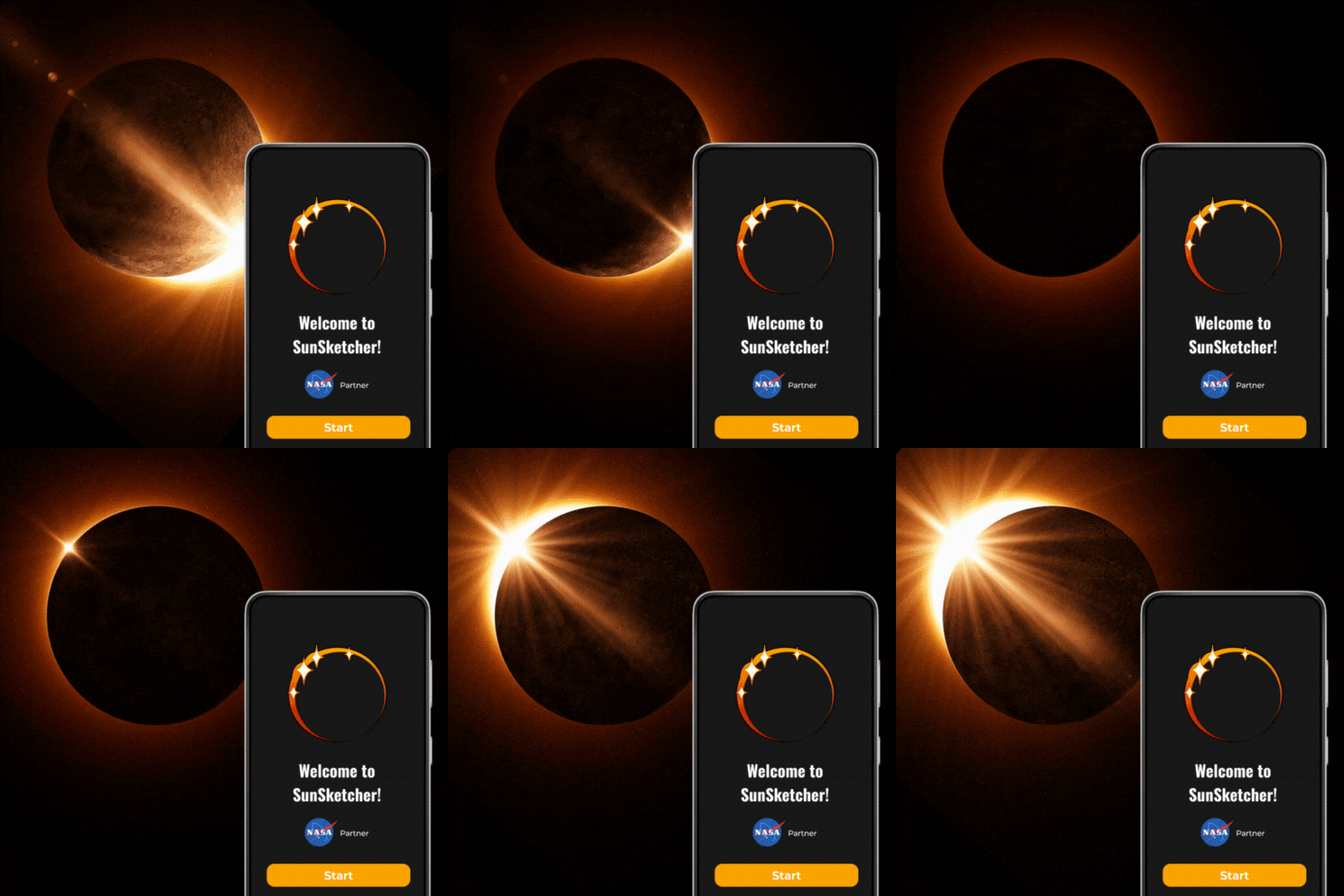
SunSketcher is a free, NASA-supported mobile app that enables the public to participate in eclipse science by capturing images of Baily’s Beads during total solar eclipses. When aggregated at scale, these images allow scientists to precisely measure the shape of the Sun—data used to test gravitational theories.
Available on iOS and Android, SunSketcher blends UX design, visual communication, and citizen science to support a high-stakes, time-critical user experience: photographing a total solar eclipse that may last only minutes.
My Role: Faculty Lead, UX Analysis & Testing / Co-Investigator on NASA grant
- Led UX strategy, usability analysis, and testing for the SunSketcher mobile app
- Mentored undergraduate UX/UI designers working on a live, NASA-backed product
- Designed and piloted the IDEA Lab, a credit-bearing internship course supporting ongoing product development
- Oversaw the transition from a fast-turn, US-based release to a scalable, global app experience
Date: Fall 2023 – Fall 2024
The Challenge
Designing for a once-in-a-lifetime moment
The April 8, 2024 total solar eclipse imposed a hard, immovable deadline. Users had one opportunity to use the app correctly—often in outdoor, crowded, high-emotion environments.
Key constraints:
- No second chances: failure meant lost scientific data
- Users ranged from amateur astronomers to first-time eclipse viewers
- Lighting conditions, time pressure, and device variability were extreme
- The app needed to work instantly, without prior training
Scaling Beyond the U.S.
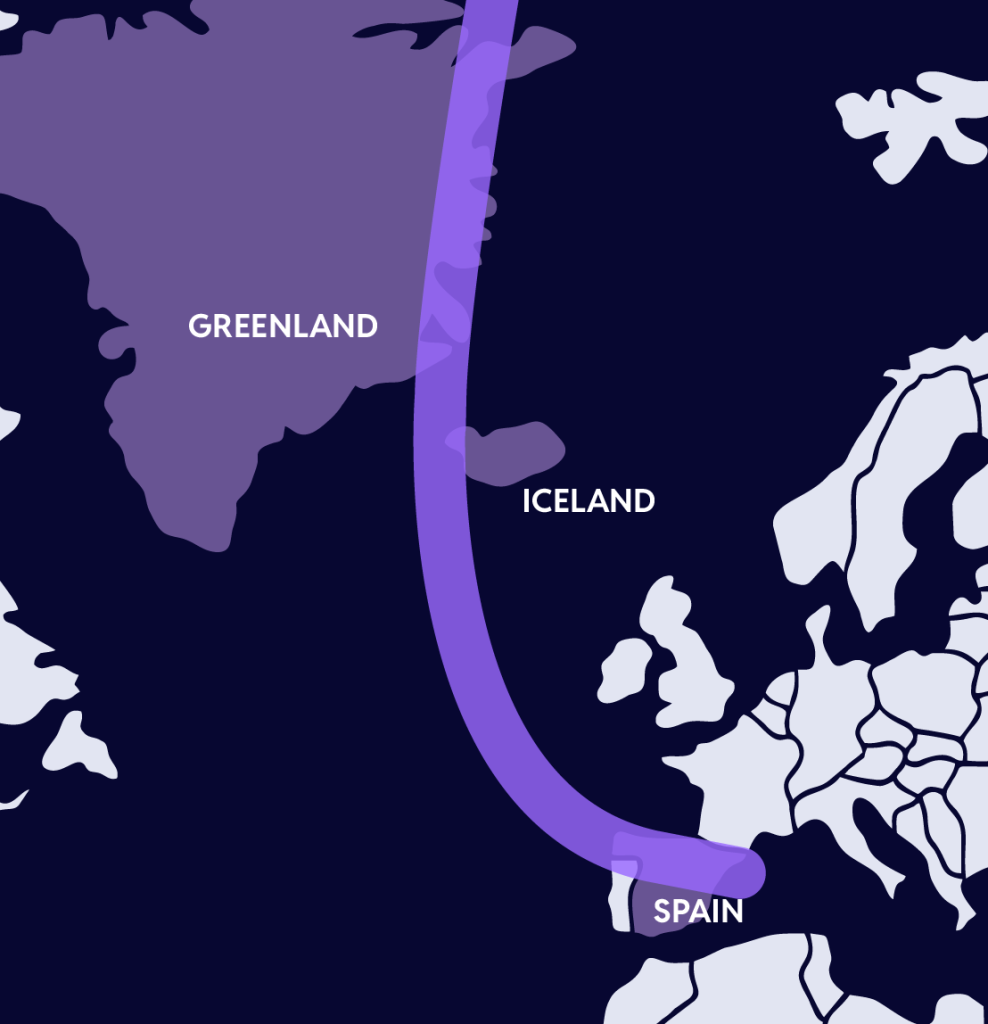
Following the 2024 eclipse, the next total solar eclipse (August 12, 2026) will pass through Iceland, Spain, and Portugal, introducing new challenges:
- Multilingual audiences
- Cultural differences in iconography and instruction interpretation
- Increased need to reduce reliance on written language altogether
Phase 1: Rapid Release for the 2024 Eclipse
For the initial release, speed was critical. With one UX/UI student designer, we prioritized:
- Core task completion
- Clear camera framing and timing cues
- Minimal friction from onboarding to image capture
This phase emphasized functional clarity over system polish. There was limited time for:
- Formalized user flows
- Comprehensive style guides
- Iterative testing beyond essential usability checks
Despite the constraints, the app launched successfully for the April 8, 2024 eclipse. Notably, many of my prestigious scientific faculty colleagues firsthand saw the value of UX.
Impact
- 40,000+ app downloads
- 150,000 images collected
- 36,000+ volunteer contributors
- Pre- and post-eclipse coverage across major outlets including The New York Times, NASA, Fast Company, Popular Science, MSNBC, the American Astronomical Society, NY Post, and designboom.
“The application worked like a charm. The event was life changing.”
2024 Eclipse Participant
Phase 2: Designing for Global Use
In Fall 2024, I led the next iteration of SunSketcher through the IDEA (Interface Design and Experience Analysis) Lab, reframing the project as a longer-term UX system rather than a one-off release.
Design Goals
- Reduce dependence on written language
- Establish a clear, logical end-to-end user flow
- Develop a reusable visual system and style guide
- Improve learnability for first-time, international users
- Support scientific accuracy without overwhelming users
Weeks 1–4: User Research
Student researchers investigated users along the path of the 2026 eclipse, focusing on:
- Language barriers and translation limitations
- Cultural interpretations of icons, colors, and gestures
- Environmental and contextual factors affecting use
Key insight: Even translated text slowed users down. Visual clarity mattered more than linguistic precision.
Weeks 5–9: Ideation & Prototyping
Research findings informed two parallel prototypes:
- English-language version
- Spanish-language version
This allowed the team to compare:
- Text-heavy vs. icon-forward approaches
- Where language could be removed entirely
- Where motion and sequencing could replace instruction
Weeks 10–12: UX Testing
With IRB approval, students conducted usability testing with 15 participants using:
- Task-based usability testing
- Product Reaction Cards
- System Usability Scale (SUS)
To simulate eclipse conditions, participants interacted with the prototype while watching eclipse footage projected in real time—introducing visual distraction and time pressure.
Weeks 13–14: Iteration
Testing insights led to:
- Simplified task flows
- Reduced instructional screens
- Clearer visual hierarchy during the image-capture moment
- Fewer decisions at critical points
Parallel Track: Animated Tutorial
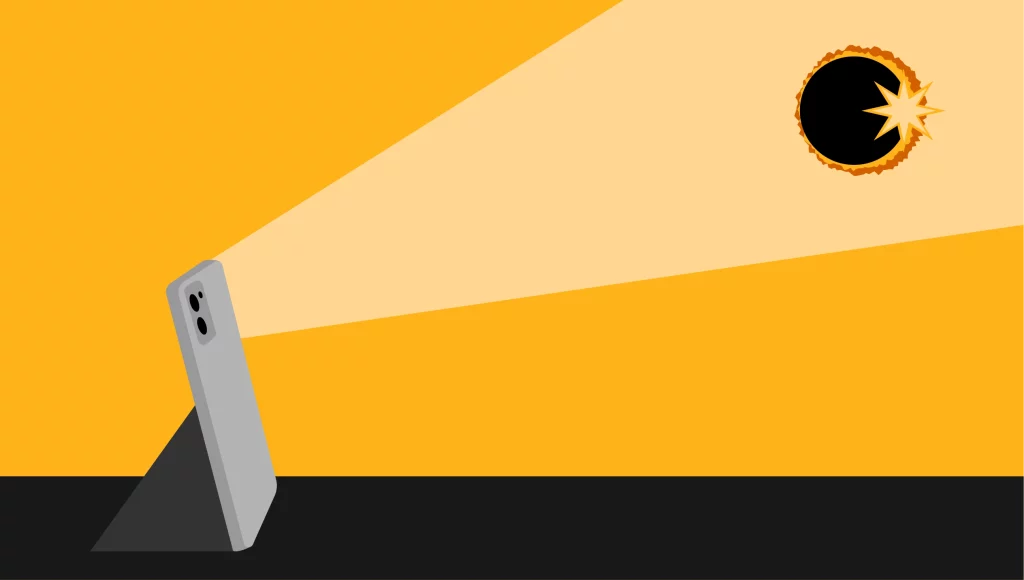
In parallel, a new animated tutorial was developed:
- Designed to work without sound
- Minimal text
- Focused on sequencing and visual metaphor
- Accessible to users whose first language is not English
- Designed to solve some of the issues from the first SunSketcher version
This tutorial became a key onboarding element for future eclipses.
Next Steps
Like many UX projects, the next step is developer handoff. The project has been handed to Computer Science students for development.
Reflection
SunSketcher sits at the intersection of UX, public participation, and scientific rigor. Designing for an event that happens once, under unpredictable conditions, challenged traditional assumptions about onboarding, instruction, and error recovery.
This project reinforced my belief that:
- UX is not just about ease—it’s about trust, timing, and responsibility
- Visual systems can outperform language in global, high-stress contexts
- Teaching UX through live, high-impact projects prepares students for real design complexity
“Your student app teams are tremendous & truly remarkable, is there some sort of secret interdisciplinary department sauce at WKU?”
Liz MacDonald, Space Physicist at NASA
Related Works
SunSketcher-related publications and conference presentations include but are not limited to:
- Publication: SunSketcher: a Citizen Science Network Project for the Heliophysics Big Year. Gordon Emslie, Hugh Hudson, Greg Arbuckle, Michael Galloway, Travis Peden, Starr May, Tameka Ferguson, Kelly Miller, Tabitha Cline, Shikha Sawant, Andrea Florence, Kelcee Gabbard, Janessa Unseld, Leah Spalding, Mark Simpson, Ernest Wright. Frontiers in Astronomy and Space Science. View article.
- More than 500 views in the first week of publication!
- Publication: On Development of SunSketcher: A Heliophysics Citizen Science Project. Jeffrey Galloway, Travis Blake Peden, Starr May, Kelly Miller, Tameka Ferguson, Tabitha Cline, Shikha Sawant, Andrea Florence, Kelcee Gabbard, Janessa Unseld, Hugh Hudson, Gordon Emslie, Greg Arbuckle, Leah Spalding, and Mark Simpson. 2025. Association for Computing Machinery, New York, NY, USA, 95–104. View article.
- Conference Presentation: Using Citizen Science to Better Measure the Sun: A Blueprint for Collaborative Research. 2024. UX Y’all Conference, Organized by Triangle Area UXPA
- Poster Presentation: Using Design and Citizen Science to Better Measure the Sun. 2024. University and College Designers Association, Design Education Summit